How to choose a liquid filling machine: piston, peristaltic or gravity
Short answer
Use a piston filler for medium to thick liquids and products with particles; a peristaltic filler for small volumes and products that must not touch pump parts; and gravity or overflow fillers for thin, free-flowing liquids where fill level matters more than exact volume.
Key takeaways
- Viscosity and particles decide the filling principle.
- Piston fillers cover the widest range, from water to chunky sauce.
- Peristaltic fillers suit small doses and fast product changes.
- Always test on your own product before you sign off a machine.
Start with your product, not the machine
Before comparing machines, write down five facts about your product: viscosity (water-thin, syrupy, creamy or paste), particles and their size, whether it foams, the fill temperature, and the fill volume range. These determine the filling principle; everything else is configuration.
The four common filling principles
| Principle | Best for | Avoid for |
|---|---|---|
| Servo piston | Sauces, creams, honey, oils, juices with pulp, 5 ml–1 L | Very small doses under 2 ml |
| Peristaltic | Essential oils, serums, e-liquid, pharma drops, 0.5–120 ml | Thick pastes and large volumes |
| Gravity / time-pressure | Water, alcohol, thin chemicals | Viscous products |
| Overflow (level) | Clear bottles where the visible level must match | Products with particles |
Piston fillers
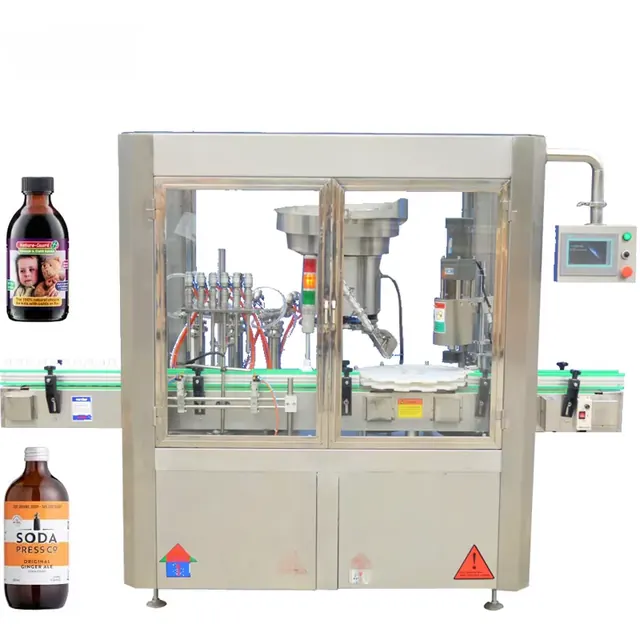
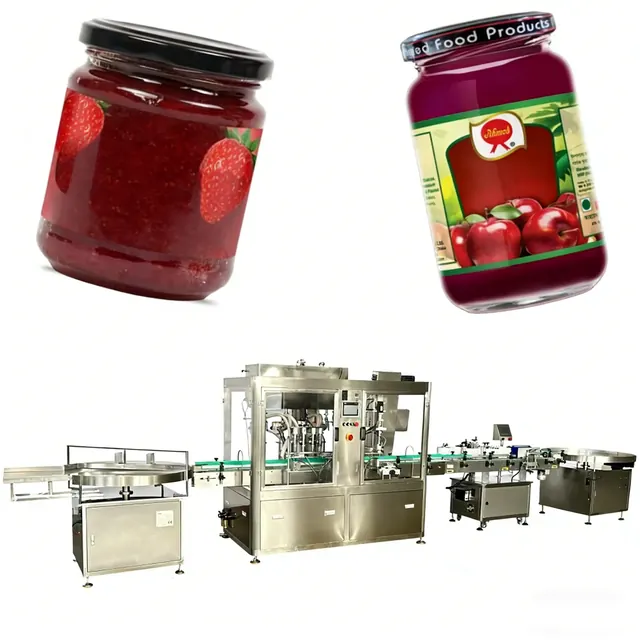
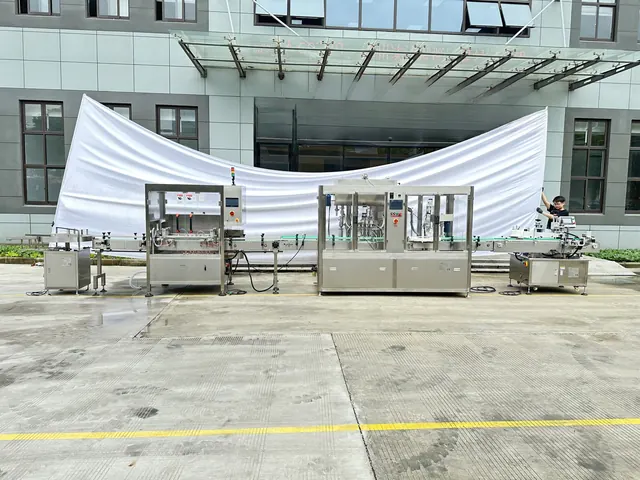
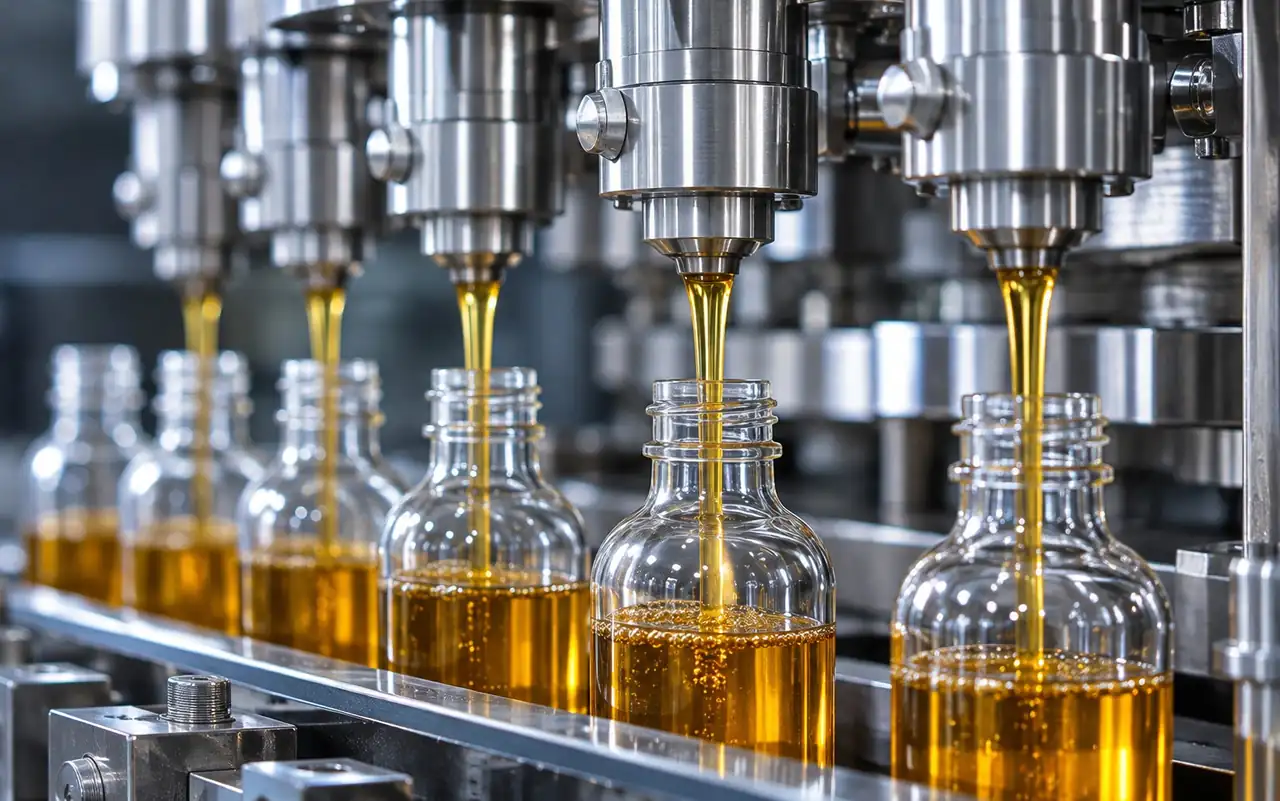
A piston draws a set volume from the hopper and pushes it through the nozzle. With servo drives the stroke is set on the touch screen, so you change volume without changing parts. Large-bore valves let pulp, seeds and fruit pieces pass. Our YG6 6-head piston filler and JG4 jar filler work this way.
Peristaltic fillers
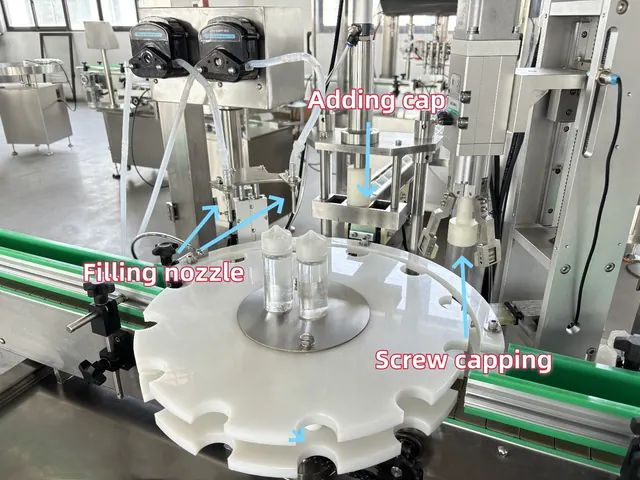
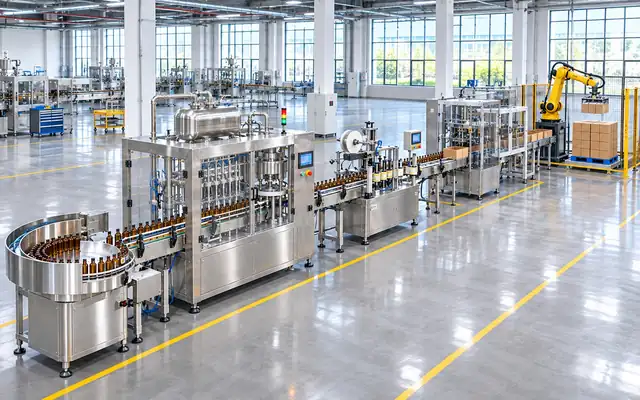
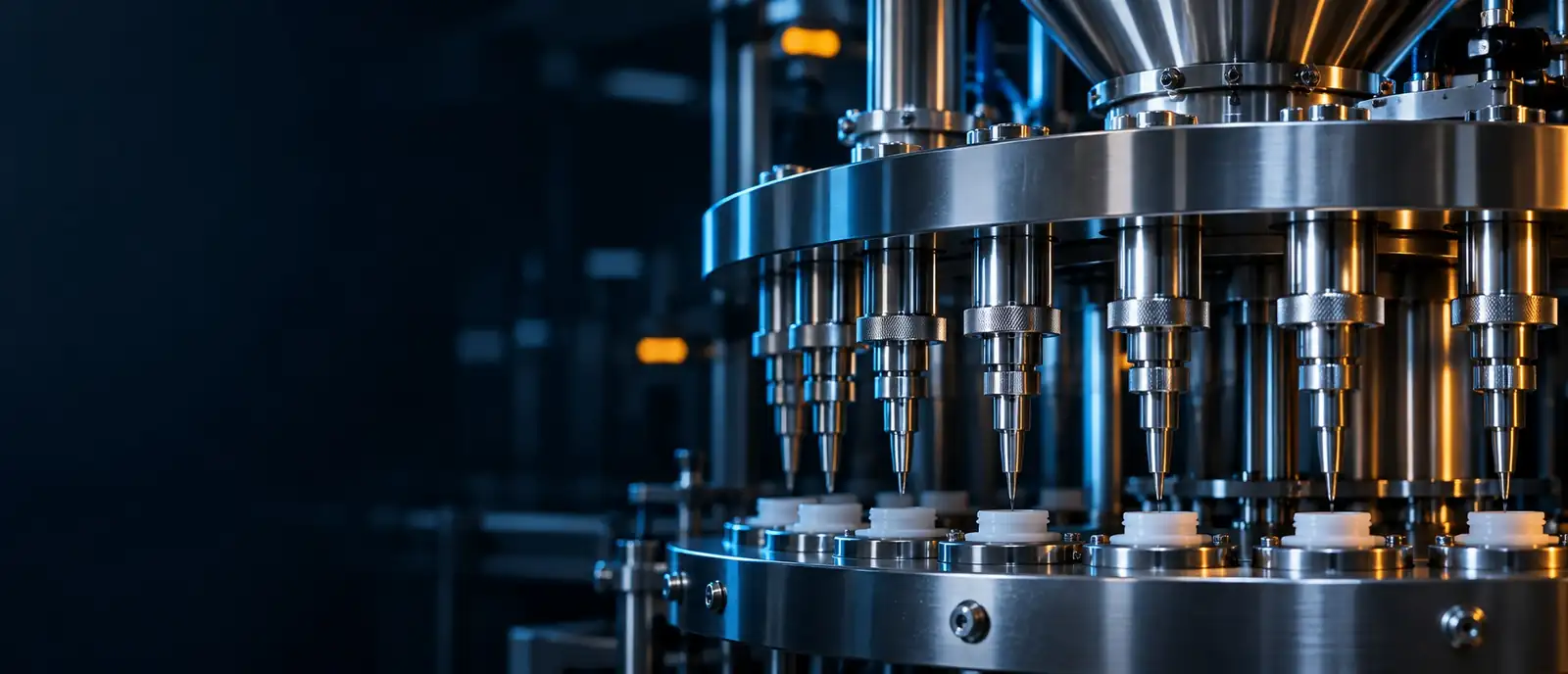
Rollers squeeze a food-grade tube to push product forward. The product only touches the tubing and nozzle, so changing between oils or formulas takes a tube swap rather than a pump strip-down. That is why we use peristaltic dosing on the dropper bottle filler.
Questions that change the specification
- Does it foam? Use bottom-up (diving) nozzles that rise as the bottle fills.
- Is it filled hot? Specify jacketed hoppers and heat-resistant seals.
- Is it flammable? Ask for explosion-proof motors and electrics.
- Is it corrosive? SS316L, PTFE or special elastomers on contact parts.
- How many SKUs? More SKUs favour servo pistons or peristaltic pumps set by recipe.
Accuracy and how to verify it
Well-set piston and peristaltic fillers hold around ±1% of target. Ask the supplier to fill your product during the factory acceptance test and weigh at least 30 consecutive containers per nozzle. Calculate the average and the standard deviation — the average shows the set point, the spread shows the machine.
FAQ
What is the most versatile liquid filling machine?
A servo piston filler covers the widest range, from thin liquids to thick sauces with particles, and its volume is changed on the touch screen.
How accurate is a piston filler?
Typically within ±1% of target volume, depending on product behaviour. Verify it by weighing consecutive fills on your own product.
Do I need a separate capping machine?
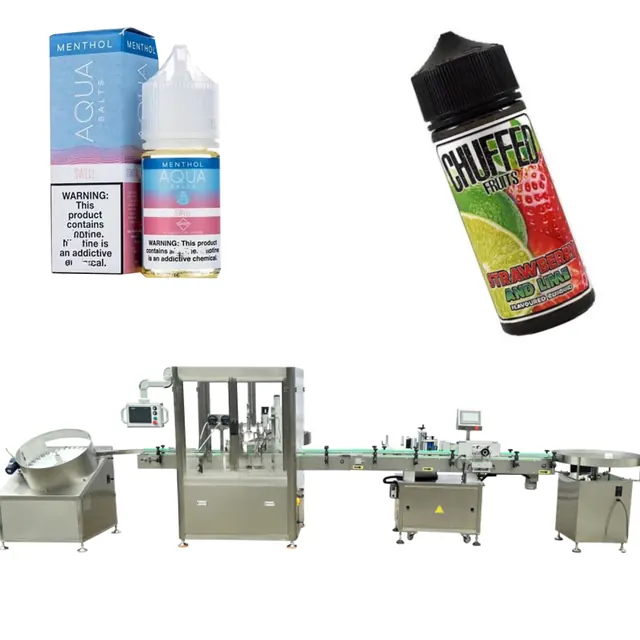
Not always. Monoblock machines fill and cap in one frame; separate cappers make sense on faster or longer lines.